

Strict calorie restriction (crash diet) can be detrimental to hormonal balance.
Why harmful?
This is why, after initial success with a calorie-restricted crash diet, you end up gaining weight again in the long run. In fact, many people who starve themselves end up fatter than they started! 'Hormone-friendly' eating also means eating enough. After all, your body needs enough calories, carbohydrates, proteins, fats, minerals and vitamins to produce healthy amounts of hormones.
If you eat too few calories for a long time (strong negative calorie balance), combustion can go down a bit, because the amount of active thyroid hormone decreases a bit. However, this is not the biggest cause of yo-yoing. That is, in fact, compensatory behaviour. If you ration yourself too strictly, you are, as it were, making a (mental) loan to yourself that you have to pay back with interest. You then often end up getting fatter and fatter in the long run.
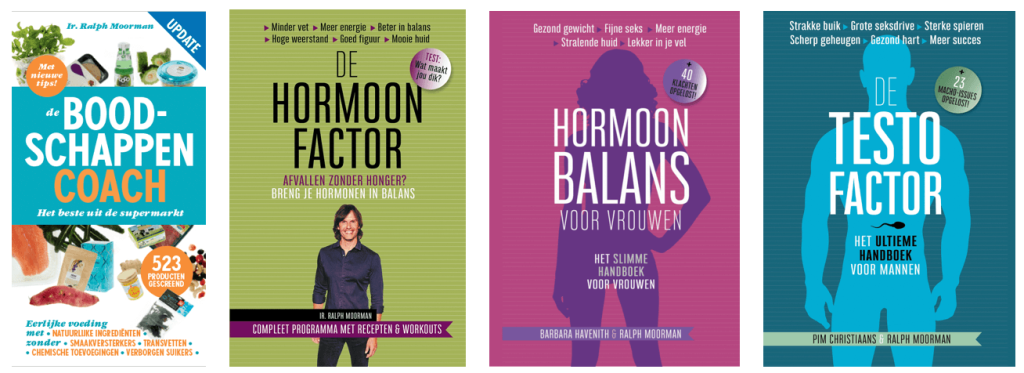
Hormones and their influence on hunger, satiety and mental appetite
Eat as nature intended
Through the evolutionary process, the human body was mainly formed in prehistory, when we lived as hunter-gatherers. We then ate what nature offered us: fruits, vegetables, meat, fish, eggs, nuts, seeds, bulbs, pollen and tubers. Everything fresh, pure, unprocessed and free of artificial additives and pesticide residues.
However, our diet has changed radically with the rise of mass production and food technology. Every day we eat products our 'hunter-gatherer body' doesn't know what to do with: way too much (processed) cereals, sugar, dairy products, ready-to-eat meals, sweets and soft drinks full of aromas, colours and flavours, trans fats, meat with traces of antibiotics and fruit and vegetables with pesticide residues. All these things disrupt your hormones. Therefore, eat only pure, preferably organic products prepared in a healthy way. And this while our environment tempts us to unhealthy behaviour. So this requires long-term motivation and discipline. You can only achieve this by recognising your biggest pitfalls and coming up with solutions for them. So you try to achieve as many lasting results as possible, while not moving too far away from your old lifestyle. This makes relapse a lot less likely than with a crash diet.
 English
  Dutch
Dutch 