
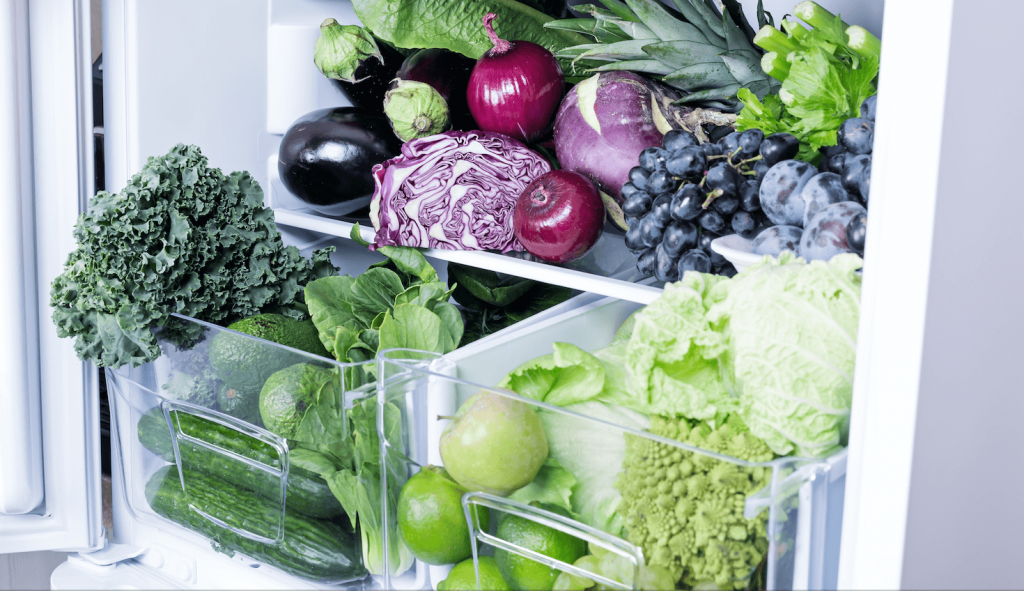
Vegetarian food is increasingly in the news. It's hip and that's fun! However, I do give vegetarians some tips so they don't get shortages.
My dietary advice for vegetarians
- While dairy products don't fit into the hormone factor lifestyle, I still recommend them to my vegetarian clients, as they get animal protein that way.
- In addition, to get enough protein of high biological value, I recommend vegetarians to supplementing with whey protein.
- Egg is also a good animal protein source for vegetarians, but the risk of building an allergy increases when eating a lot of eggs. Therefore, alternate eggs with dairy products.
- Plant-based products do not contain vitamin B12 and iron. Therefore, I recommend a supplement with vitamin B12 and vitamin C (for better iron absorption) with evening meals.
- Some flexitarians eat fish occasionally. For their hormone balance, this is a very good idea!
What are vegetarians anyway?
These are people who eat vegetarian food. Vegetarianism means not eating meat, fish, shellfish, poultry and by-products of slaughtered animals (such as rennet and gelatine). Your diet consists of vegetables, fruit, grains, legumes, seeds, nuts, mushrooms and only the animal products milk, honey and eggs.
How is it different from vegans?
A vegan diet involves eliminating all animal products. This goes a lot further.
Why eat vegetarian food?
Motives to eat vegetarian can be animal friendliness (against animal suffering) and sustainability. Sometimes also from a health point of view. However, the total diet must then be well balanced. A vegetarian diet is not necessarily healthy and must meet certain requirements so that the advantages outweigh the disadvantages. So there are both healthy and unhealthy vegetarian diets.
Suitable for your hormones?
Vegetarians regularly ask me if the hormone factor programme can be followed for them. This is indeed possible! It is a lot easier to The hormone factor to follow as a vegetarian than as a vegan. In fact, as a vegan, the risk of deficiencies is higher if you don't have a proper eating plan.
The tips on stress reduction and training are basically the same for vegetarians. In terms of food there are a few things to watch out for, though.
A) Lower biological value
Biological value is a measure of how similar a protein is to the body's protein. The higher, the more efficient for the body. Vegetable protein sources have a lower biological value than animal protein sources. So a vegetarian who gets a large part of his or her daily protein intake from plant protein sources will then need a higher protein intake for the same effect in the body.
Soy protein is a plant-based protein source that does have biological value (exception). However, I do not recommend soy products for daily consumption. The reason is that with large intake, soy can have a negative effect on mineral absorption and the thyroid (goitrogens).
To avoid protein deficiencies, it is wise for a vegetarian to eat many plant-based protein sources. Consider combining cereals and pulses to obtain a protein mixture with as complete an amino acid pattern as possible.
Furthermore, they may also use some animal protein sources as whey protein (shake) and egg for example.
Casein from dairy products is also a protein source with high biological value, but as stated in the book The hormone factor read I find milk products with casein and lactose not something you should consume in large quantities.
Occasionally goat's cheese or goat's curd cheese I do think for a vegetarian it is a consideration. It is often casein of a different kind (A2 casein) that is sometimes more tolerable.
B) Often contain no saturated fat and instead are high in omega-6
Adrenal and sex hormones are made from cholesterol. As a vegetarian, there is a chance that you are not getting enough fats and, proportionally, too many omega-6 fats. A diet high in omega-6 fats could potentially cause low-grade inflammation.(1) This is because most vegetable oils and fats are omega-6 fats, while people eat relatively little omega-3 (from fish) and saturated fats (e.g. from meat). You can also get saturated fats from vegetarian sources. Consider butter, goat cheese (in moderation), and eggs (yolk). Omega-3 fats are found in seeds, and especially in linseed (flaxseed oil).
C) Less absorbable iron, vitamin D and vitamin B12
Iron is much less absorbable from plant foods than from animal ones. It is therefore wise to occasional vitamin C add to a meal, which improves iron absorption.(2) Broccoli, cauliflower, tomatoes and citrus fruits are good plant sources of iron.
Vitamin D can be made by the body itself using sunlight. In addition, it must come from food. Vitamin D is found almost exclusively in animal sources, hence butter and eggs are important. I would recommend to any vegetarian who does not live in a sunny country vitamin D too replenish.
There may also be a shortage of vitamin B12 arise. B12 that we can absorb well is only found in animal products. Another reason to eggs, butter and goat's cheese not to be left out as a vegetarian. Personally, I think it is wise for a vegetarian to have their B12 levels tested from time to time and, if deficient, to get a prescription for a B12 B12 injection fetch or take supplementation.
What do vegetarians eat?
Former natural bodybuilding champion and vegetarian Leander de Weijer says: People regularly react with amazement to the fact that I have never eaten meat in my life and am therefore a vegetarian. While they observe me incredulously at first, they soon burst out with questions such as: how did you get so big? How did you get that muscular physique and what do you eat?
I was raised completely vegetarian and organic from birth, something that initially seemed a handicap to my sporting lifestyle. Meanwhile, during my 23 years of fitness passion, I have amply proved that even as a vegetarian you can achieve great results in your sporting goals. In 2010 and 2013, for instance, I became Dutch natural bodybuilding champion.
There are a number of important issues for your health and athletic performance to consider as a vegetarian/flexitarian. In terms of training, one must obviously comply with all training requirements:
- Sufficient variety in your strength training (hypertrophy training)
- Sufficient recovery (at least 48 hours)
- Not too much stress
- Sleep well
- Good nutrition (for sufficient anabolic hormones)
Regarding nutrition, I will give you the following:
Proteins
Sufficient protein benefit your recovery and athletic performance. Animal proteins are higher-quality than plant proteins, which is why it is important to get them in plenty. High-quality animal sources that are also suitable for vegetarians are eggs, cottage cheese (in moderation) and Whey proteins in supplement form.
Fats
Gym fanatics often get too little right fats in, because they fear getting fat from it. This is incorrect, even vegetarians often do not get enough fats by eating many plant sources. This does not benefit hormone balance and thus testosterone production; sufficient testosterone is very beneficial for the development of your muscle mass. Good sources of fats are nuts (unroasted and unsalted) eggs with yolk and henceforth fry or wok in coconut fat for your portion of good fats. Omega 3 are important fatty acids that is mainly fish sit. Suitable plant forms of Omega 3 are: Linseed, chia and hemp seeds. As a supplement, you can also take Omega 3 from algae obtain.
A healthy hormone balance through consuming the right fats will benefit your muscle development your shape and your health.
Supplements
The vitamins and minerals iron, vitamin D and vitamin B12 are mainly found in animal products. These substances are available in easily absorbable supplement form and very important for a well-functioning body.
So take note: Being a vegetarian can go particularly wrong in terms of diet and the amount of anabolic hormones. In order to produce enough anabolic hormones, it is important to eat enough fats and calories (3) (4). This is a point to note given that many animal fat sources are eliminated and high-fibre vegetarian food can be hugely satiating (low in calories and thus potentially lose weight).
 English
  Dutch
Dutch 