
Do you throw away a can of corn or packet of soup as soon as the expiry date has passed? Actually, you don't have to. But it is better to throw fresh products away immediately.
What exactly about food shelf life? Food technologist and shopping coach Ralph Moorman explains.
Article from 'Friend (no.22, 2016), by Esmir van Wering, www.esmir.nl
Two types of best-before dates
Food packaging indicates its shelf life in two ways:
- Best before (THT)
- to be used until (TGT).
Best before (THT)
Products with a THT date are also fine and safe to use after the indicated date. After that time, their taste or colour may have diminished a little, but eating them is certainly not a health risk. A requirement is that the packaging is unopened and undamaged and that the product has been stored in the prescribed manner. This applies, for instance, to vacuum-packed products, tinned foods, an unopened bag of crisps, soft drinks, very sweet products such as candied fruit, dry products such as rice and pasta, tea, biscuits, crisps, liquorice, chip sauce and ketchup.
To be used until (TGT)
Products with a 'use by' date are usually fresh products with a relatively shorter shelf life, such as dairy products, meat, fish, pastries, fresh fruit and vegetables. Has the TGT date passed? Then it becomes unsafe to eat these products. Dangerous bacteria such as Listeria can then exceed the pathogenic threshold amount.
Tainted food
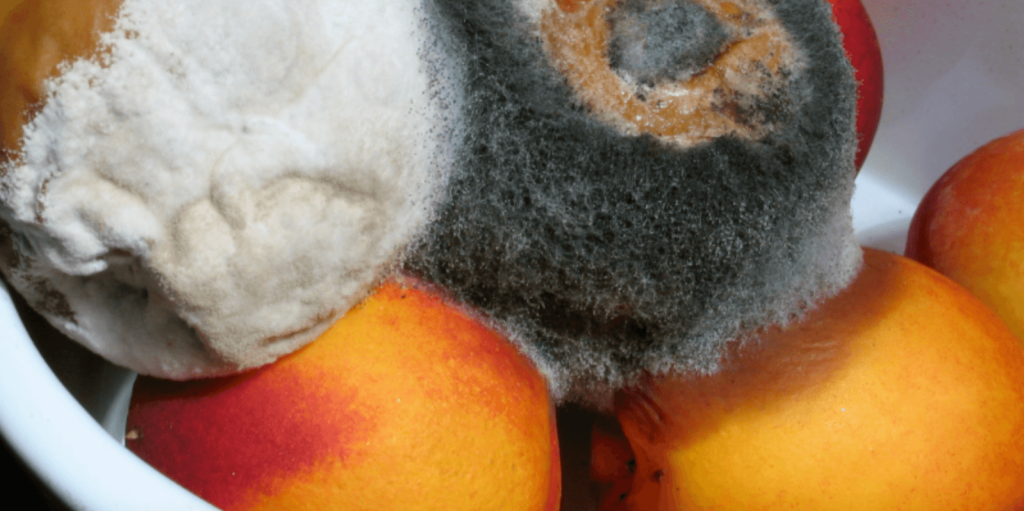
The insidious thing is that you can't always see or smell whether a product is still good. If the cheese is covered in blue or white mould, don't grate it off, just throw the whole cheese away.
A product can spoil in two ways:
- Common food spoilage. Of these, it will not escape your notice whether something is still fit for dinner or better off in the bin.
- Microbiological food spoilage. You can't always see, taste or smell this! So a product can still seem perfectly edible, while still containing large amounts of bacteria. This puts you at risk of a food infection or food poisoning.
Food technologist Ralph Moorman: "There are bacteria on almost every food product. Or rather 'bacteria eggs', also called spores. How fast bacteria multiply differs per foodstuff and depends on the amount of bacteria and spores there were at the beginning, also known as germ count, and the way they are stored.
Until when you can still eat something is indicated by the 'use by' date on the packaging. After the TGT date, there may be so much bacteria that it makes you sick. So after this date, it is better to throw it away. Not only bacteria can make you sick, but also toxins created by food spoilage. Heating does kill bacteria, but the toxins remain. So cooking a spoilt product is still not safe."
The bottom line: so stick strictly to the TGT date and feel free to take the THT date with a grain of salt.
Reading labels
Note the preservatives which are added to many foods. Both benzoic acid (E 210) and sodium nitrite (E 250) are known to be potentially harmful to health. Benzoic acid is often found in shrimps, ready meals and many other acidic products. And sodium nitrite is usually found in processed meats. Eat these products as little as possible and preferably no more than twice a week.
Did you know that...?
- The Netherlands wastes between 1.8 and 2.7 million tonnes of food. That is equivalent to around 5 billion euros going into the dustbin.
- While 1.4 million people live in poverty, that's 734,000 households.
- On average, people use the food bank for a food parcel for one year. After that, their financial situation has improved to the point where they do not qualify for a free food package.
Source: Poverty and social exclusion 2015
 English
  Dutch
Dutch 
2 Response(s), post a comment too!
Sealed and aluminium-wrapped products are also used by me long after the tht date, sometimes the taste is slightly off but so far not a dime. P. S. Just had cappucino from 2010.
Dear Ralph,
Personally, I never throw away food. Because I know, that food is something, to be grateful for.
I also pray every day at meals for the many refugees and people in drought areas and poor, that God will provide them with daily food.
And God is a Wound Counsellor, almighty God, Who does miracles.
Shalom, Ann.