
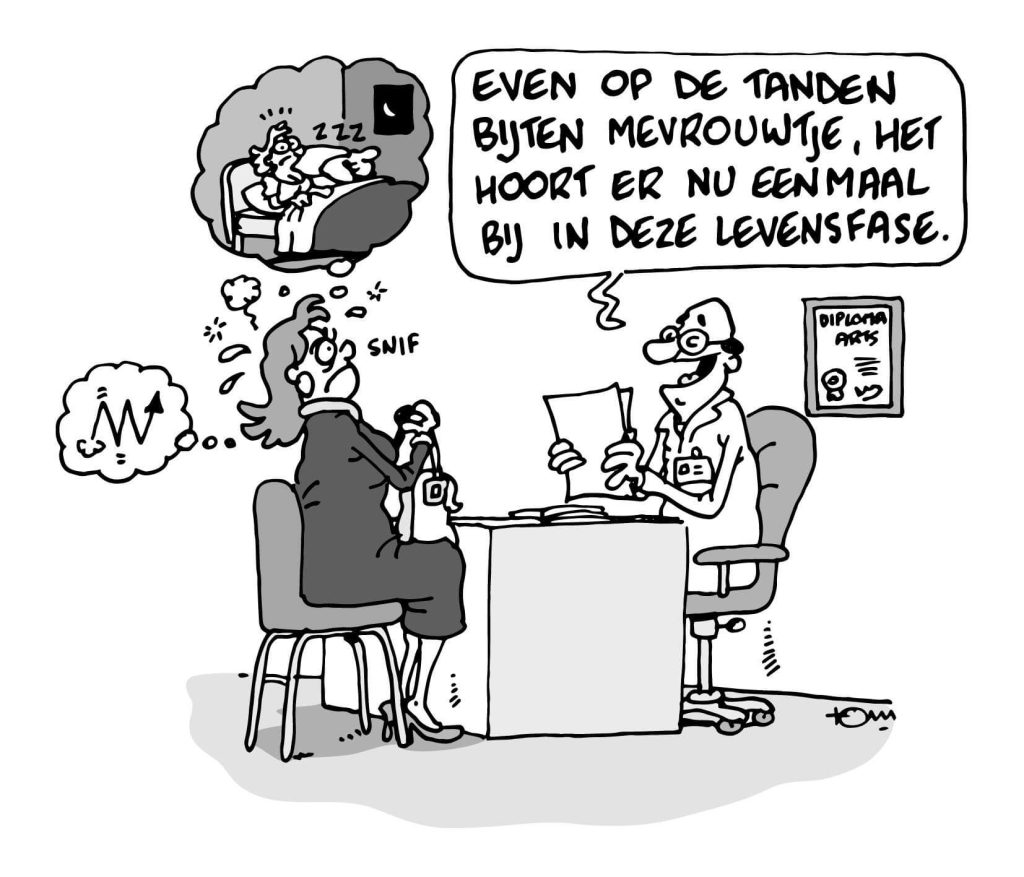
Hormonal replacement therapy and the use of (bioidentical) hormones just before and after menopause is increasingly well known and used in the Netherlands.
Specialist women's doctors for hormone therapy
Among other things, many Dutch celebrities have dived into the subject and so the information reaches an ever-growing audience through podcasts, internet platforms and social media. Increasing demand then creates more supply, leading to more and more women with menopause complaints or anti-ageing goals can visit a specialised women's doctor for hormone therapy. As far as I am concerned, this is a fine development, but of course there is also a downside.
Customisation with expert assessment
Sometimes I do read pieces online or in the media touting it as some kind of panacea for every woman, downplaying almost all the risks. And what is actually much more damaging are forums or Facebook groups that are not properly moderated in which women who are not at all trained to do so advise other women on, for example, dosages.
And yes, it is very good that the option of hormone therapy with oestrogen, progesterone and possibly testosterone is now becoming more widely available. However, this is not to say that every woman can mindlessly use it as if it is the same as taking a vitamin C pill.
In fact, before prescribing therapy, a doctor must do a very good history and take stock of the woman's clinical history. There are all kinds of contraindications and the dosage should be sufficient, but also certainly not too much. This too is tailor-made and requires expert assessment.
Lay people who share in Facebook groups that they have increased the dose on their own and claim to feel better are not only putting themselves at risk, but also others. This is because the negative consequences of overdosing often manifest only in the long term, so your good feelings in the short term can cheat you considerably.
Healthy diet and lifestyle
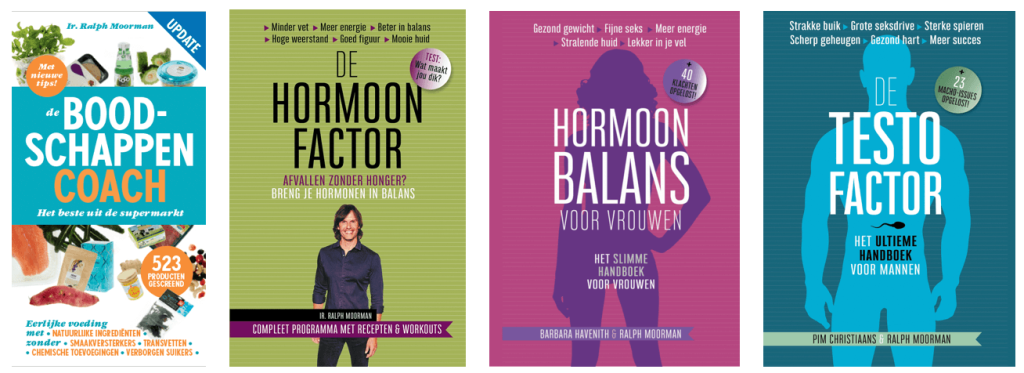
What is also a risk of too much focus on hormone therapy is too little attention to healthy diet and lifestyle in the transition years. It is certainly true that you cannot reverse the transition with hormone factor nutrition and lifestyle, but you can sometimes reduce menopause symptoms with it.
I always explain to my students that you can use diet and lifestyle to ask the body to become more hormonally balanced and reduce symptoms. This gives little chance of side effects because you are then trying to remove the causes. Another option is to force the body with symptom-fighting solutions such as taking antidepressants against the severe mood swings that menopausal women can have. This puts you at risk of all sorts of unpleasant side effects.
What does hormone replacement therapy cover?
Replacement means that hormones are replenished below the levels known to the body from fertile years. There are still quite few known side effects of this. I personally think that in that case you are not really forcing the body so it does not protest.
But when you dose higher than the body was used to before the transition, you do, in my opinion. And that, of course, is not the intention. But how well can we adjust the dosage at the moment?
With new practical experience, scientific research and improved customisation protocols, fine-tuning is likely to get better and better.
All in all, I think it's a very good development that hormone therapy is becoming more widely known, but as always when you come up with hormones works, caution is required. Get guidance from a knowledgeable reliable doctor and do not experiment and make adjustments on your own.
 English
  Dutch
Dutch 