
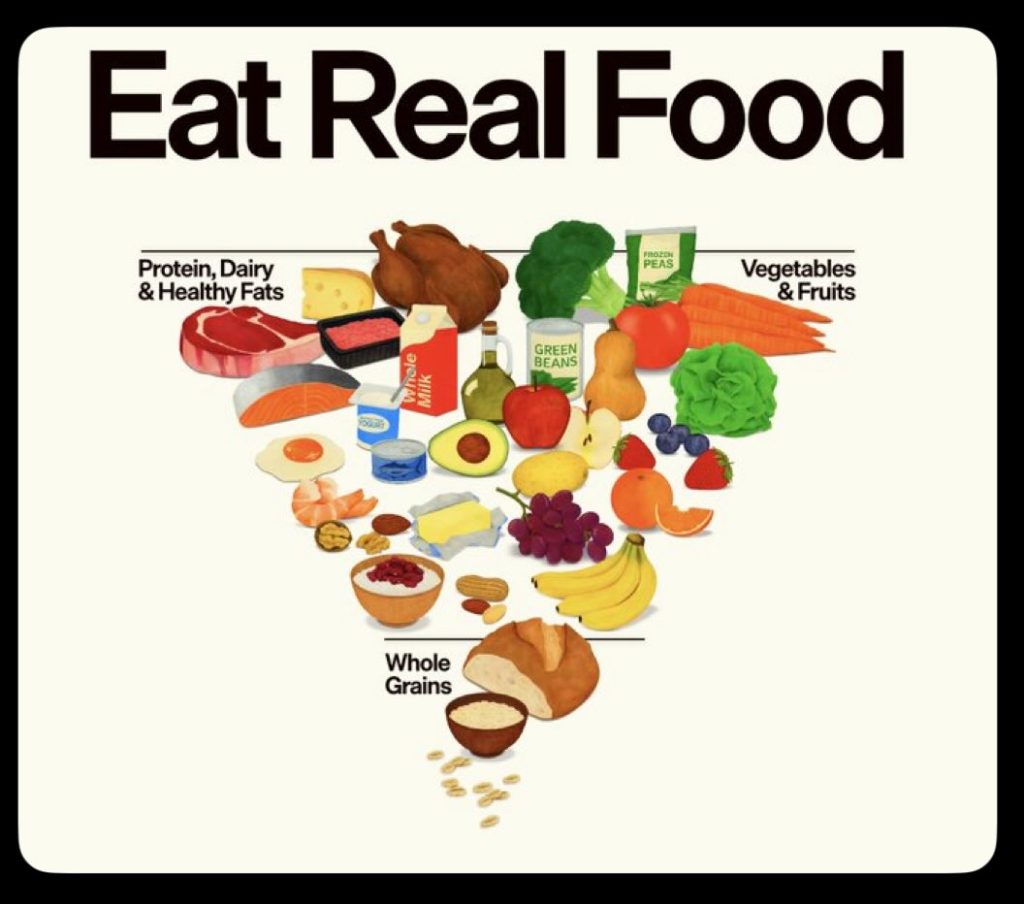
Recently The new US Dietary Guidelines published for the next five years.
New dietary guidelines in America
Robert Kennedy has gone all out with his Make America Healthy Again or MAHA movement. What stands out?
1. Eat real food
The main message of the new guidelines is 'eat real food'.
The emphasis is less on calories and much more on nutritional value and low processing. A much clearer stand is now being taken by ultra-processed food really inadvisable. I think in the required simple communication to the public, this is a very sensible one. Minimally processed food usually has a higher nutrient density (higher nutritional value, in other words), does not disrupt blood sugar too quickly, satiates longer, has a lower follow-through factor that makes you stop eating sooner.
Besides, 'real food' (which contains less sugar, fat and salt) releases less 'happiness substances' in the brain, causing people to have emotional cravings for it (food addiction and emo eating).
Also, highly processed food with lots of additives is quite experimental when it comes to our health and we are actually not very sure what that means in relation to complaints, diseases and lack of vitality.
Of course, his not all processing and additives bad when you zoom in on the products, so again the advice is not correct in all cases. Still, in a broad sense, it is good and easy-to-remember advice for citizens who are not very health-conscious.
2. More protein
A protein intake between 1.2 and 1.6 grams per kilogram of body weight per day is advised.
This is higher than what the Nutrition Centre recommends (from 0.83g). This also includes plenty of animal protein promoted such as full-fat dairy, as well as meat.
In addition, the Food Pyramid has also been flipped, which actually results in a lower intake of carbohydrate sources are advised such as bread and pasta. This advice certainly doesn't seem wrong in communication either. In an overweight country, eating more protein-rich food can provide better satiety and slightly more energy use in the digestive process.
Low-carb advice may also cause people to eat fewer refined starch sources, as these are now common in the obesogenic environment of the average American. So both low-carb and high-protein advice could be beneficial with regard to average calorie intake.
3. More fat
'Low fat' is no longer promoted.
For example, full-fat dairy is actually recommended. A benefit of a little fat in your meal is also that stomach emptying is slowed down and this can make blood sugar rise more slowly after the meal and increase satiety.
You may even find that by eating high-calorie fats, you actually have an average lower calorie intake gets through improved satiety. Of course, this does involve eating a little more fat-rich food than the old low-fat advice and not throwing three avocados through a smoothie.
How this advice will play out in relation to obesity, the future will have to show.
However, what I don't understand in the new US Guidelines is that there is still an advice to saturated fat below 10% in the diet. You could achieve this by eating less processed foods it is said. When you eat less processed, you mainly get less unhealthy trans fat and oxidised vegetable oil in. It would then only be less saturated palm oil in ultra-processed food that would suddenly make you meet that guideline? I think something is really wrong there. The paper does say that more proper research is needed to determine which fats best support health. In other words, there is a lot of doubt on that front. I wouldn't be surprised if this saturated fat advice will eventually go away because of too little scientific evidence.
Conclusion
All in all, I am very positive about this new sound from America. As you may have read, with regard to the New Dutch Health Council guidelines me quite worried about interference with the issue of sustainability in health advice. Fortunately, the US Guideline is purely concerned with effects on human health itself, keeping the discussion pure.
 English
  Dutch
Dutch 