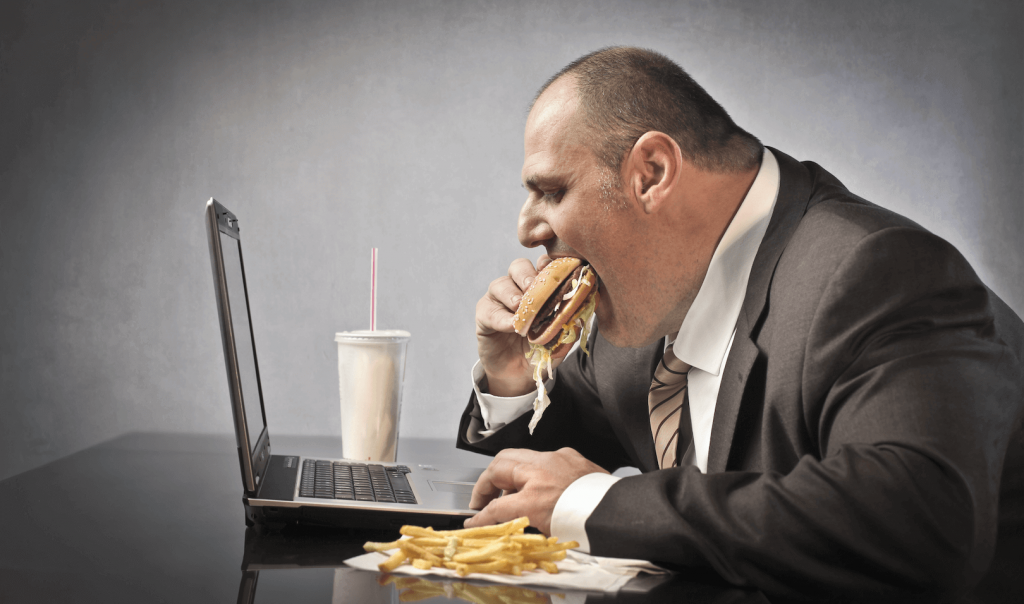
Over the past 30 years, the number of obese people has virtually doubled in the Netherlands. Many experts and nutritionists are looking into this problem and searching for a cause and solutions to the obesity epidemic.
The cause in my opinion
Of course, there is no single cause and there are all sorts of factors that come into play as to why people eat more and burn less. Some talk mainly about calorie intake and others about calorie consumption. The other about a change in metabolism.
What is clear is that it is difficult to find scientific evidence when there are many influences and many different things have changed over the last 30 years. Since I can't figure it out scientifically either, I appeal to my reasoning. What am I thinking?
Of course, I would welcome additions, criticisms and feedback, because the figures are so serious that something really needs to be done. In doing so, it is also important that all stakeholders described below take responsibility and do not point the finger at each other. Cooperation is required to get to the root of the problem.
Obesity epidemic and the individual
Of course, the person in question has an influence on his or her behaviour. It is important to be honest with yourself. Not just point to influences outside yourself but take responsibility in your own hands. Having the right intention is crucial for a permanently balanced eating behaviour and you need to know well why you are pursuing it. You also need to find an achievable eating pattern and you can discover what the pitfalls are mentally through self-analysis. There may also be heavier mental barriers that stand in the way of lasting behavioural change. Mental coaching can be a very important addition here.
But has the individual in terms of discipline and mental state changed so incredibly in 30 years that this explains the doubling of the obesity rate? This does not seem to me to be the main cause.
Obesity epidemic and the food industry
If anyone has witnessed up close how developments in the food industry have been, it is me as a food technologist. I started my studies at Wageningen University in 1995. That was the year when convenience foods were the main focus, so ready-made meals.
As a result, more and more calories were being sold with no nutritional value. Low-quality bulk raw materials were also transformed into irresistibly delicious products through a wide variety of additives and processing. Of course, every food concern has a commercial angle and this means selling as much as possible. So it is interesting to entice consumers to eat as much and as often as possible of the product.
Some tricks:
- When designing a foodstuff, you make sure that you will be like a conductor guiding an orchestra from beautiful instruments to a great piece of music that keeps you listening. Well-known instruments you can use are: Look and feel (use of colour, shape and texture), mouth feel (think crunchy and melting), aromas through the nose (think the smell of freshly baked bread), and taste sensations on the tongue (meanwhile 5 flavours by adding the umami/E621 flavour). We homo sapiens simply stop doing something when it gets boring. A piece of salmon is nice, but you never eat a kilo of it, just like you never eat a dry bread whole. So you put the thrill package of a buffet in 1 meal and you eat more than you intended.
- Processed snacks full of sugar, fat and salt release happy substances, so we often eat to suppress or enhance a mental state. We would not do this 'eating without hunger' with only unprocessed natural products. No one eats a pan of broccoli when stressed or lonely, but they do eat a bag of chips.
- With the supermarket becoming ever sweeter and obesity on the rise, there are many more people with insulin resistance (and other hormonal imbalances) than before. Possibly, foods high in white flour and sugar cause overeating by causing blood sugar instability and thus dips.
- Benefit packs also cause overeating. Who has not been brought up with the compulsory emptying of the plate. This also translates into emptying advantage chip bags, for example.
- Commercials from food corporations psychologically steer us much more towards the patented processed products that we find difficult to measure up to.
Obesity epidemic and the supermarket
- A complete psychological plan has been devised in the supermarket to guide consumer purchases. This plan leads us not to the pure and unprocessed foods but to the patented a-brands, which have a lot of influence on shelf layout and routing.
- In the supermarket, people are not really encouraged to buy pure and unprocessed food. The labels focus much more on the a-brands. Also, consumers are hardly encouraged to start cooking again themselves by offering recipes and other help. The recipes often found in supermarket magazines include the processed sauces and other convenience foods.
- Just before the checkout, consumers are tempted to make an impulse purchase and these are usually bars or sweets.
- It is notable that weight loss methods that recommend pure and unprocessed foods are not promoted in the supermarket. This is in contrast to methods such as Sonja Bakker that actually promote patented foods, and the packets, sachets and bars of various crash diets in the speciality food section.
- The price of processed food is also often lower than fresh unprocessed food.
Obesity epidemic and the government
- The government is not helping adjust existing rules to patents. Thus, there is no interest in making products that are 100% natural with only mild processing.
- Regulations regarding the marketing of junk foods and sweets are very lenient. For example, children can still be tempted by placing snacks at children's height. They are also encouraged to persuade parents by printing the cutest cartoon drawings on packaging and linking toy-saving campaigns to it.
- Labelling regulations still leave room for not being transparent about the additives used and playing hide-and-seek.
- The government emphasises peripheral issues such as reducing the salt content of foods. In contrast, limiting the amount of sugar in a product is not addressed.
Who will take responsibility? To be continued!
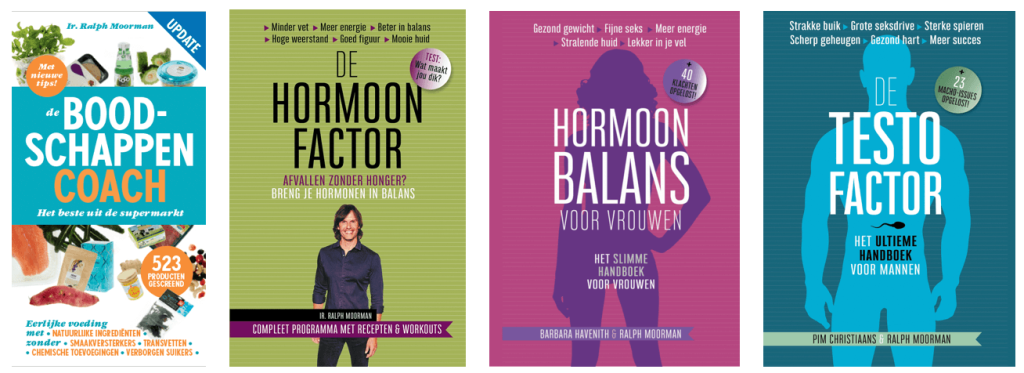
Ir. Ralph Moorman
 English
  Dutch
Dutch 
16 Response(s), post a comment too!
Saddens me that it's never about how we get our brains hacked. Literally addicted to that combination of salt, sweet and fat. That diabolical trio that then makes us crave a snack :-). My switch-off from an already 'healthy diet' to hunter-gatherer food took up to 16 days. With mood swings, arguing, sleep disturbances etc..
For years now the Savannah diet lots of vegetables, nuts, kamut and barley (only grain), poultry, fish and shellfish. No mammalian meat because of leaky gut, no dairy because of hidden carbohydrates.
Breakfast with home-baked bagel with avocado and broccoli sprout or home-baked sourdough bread with seeds, mayo and boiled egg. Lunch (regularly not) salad with fruit, nuts, vegetables, or a vegetable soup. Dinner 3/4 vegetables and 1/4 fish, chicken, nuts, egg. And never count calories. Organic as much as possible and sometimes a dash of oil over the vegetables. Sparing with spices, but lots of green herbs. Sometimes I gained a lot of weight with medication (also from sighing) and after stopping medication I lost weight again.
NB
Meat substitutes are often high in carbohydrates and salt and far too processed.
Fortunately few animal products, so good for the future of planet too
After being declared chronically ill, I found out through bioresonance that apart from a B12 deficiency, I also had a leaky gut which explained my symptoms chronic migraines, neck and back pain, brain fog and much more.
I eat mostly unprocessed now 3 nutritious ( kh poor mainly slow kh, lots of vegetables and occasionally chicken or fish) alternate meals a day. Drink no kh lots of water or homemade hot or cold tea and use omega 3 a multivitamin and extra magnesium. I occasionally do a detox cure.
Because I follow the 80/20 rule, I enjoy a cake or a glass of fruit juice extra on a festive occasion, for example.
I use grass-fed butter, coconut oil or olive oil for frying.
These days, I take more time for myself, learn to say no and look at what can be done as much as possible. I also reflect my own behaviour but am kind and respectful to myself. I am allowed to learn from my mistakes.
Also, I am grateful for my process that I am going through even though I sometimes experience painful moments.
Eventually, I took up orthomolecular studies and started my own practice.
Bye Ralph,
Nostradamus predicted it: that industry was going to take precedence over people, and that is exactly what we are seeing now. We are seeing more and more people with atypical sexual preferences, and people who identify with the opposite sex: to me as a therapist, these are symptoms of hormonal imbalances, made possible by allowing the many chemicals in our environment. Our hormonal system is the most sensitive to pollution, and dozens of toxic substances are found in umbilical cord blood these days. Of course, during the developmental phase, we are even more susceptible to disruptions. I'll send you the link with the 'European-approved list of substances with demonstrated endocrine-disrupting effects' : https://edlists.org/the.ed.lists/i-substances-identified-as-endocrine-disruptors-by-the-eu To be clear: I have every possible sympathy for people with atypical preferences and gender-confusion: you don't choose that, and it is a difficult process for many. I don't care what sexual preference someone has, or whether they feel more like a man or a woman, it has absolutely no impact on my life, but what bothers me is that this human suffering can be prevented by keeping our living environment free of toxic substances. It is up to the government to oversee this, and they clearly don't.
Hormonal feminisation is certainly what happens hormonally, but to what extent hormones affect sexual preferences and gender identification (or social change), I dare not say
Dear Ralph - Hormone Coach -Netherlands -
Thank you very much in advance for your useful information - Personally until my 20s I never went to the doctor or dentist- Mein basic diet was largely sea food (algae- fish- shellfish) - When I was forced to arrive in the Netherlands it became a habit to regularly go to the doctor and dentist - After mein 30x years of illness I started to seek mein salvation in a daily diet - Not wrong that currently 53% of the Dutch population is chronically ill and over 2.2 million disabled people exist o.a. - Sad & depressing enough - Shall we go back to Docter Hippocrates & Docter Lukas? Thanks again -
With health greetings -
F e l i x
[...] 4 causes of the obesity epidemic [...]
Hello Ralph,
May sound a bit strange but sometimes the answer is so simple. Has it been staring you in the face for years but there are still certain ingrained dogmas that make it impossible to look at things clearly. I saw some of your other blogs and the answer really stares you right in the face.
To get right to the point, you mentioned it yourself, there is no animal that gets too fat from its preferred food. King lion does not get muddy, the deer that is the boss and can eat the juiciest grass does not get too fat. Animals only get too fat if they are served the wrong food, not if they eat too much of their preferred food . An animal doesn't. (Except animals that "hear" fat, of course). Does a healthy body get in what it needs it causes the head to stop eating. If you want to fatten up cows you give them grain. If they can choose they eat grass. You can also fatten up rats with a certain diet. So it is not so strange to say that if half the people are obese (and the other half are gaining weight) they are apparently fed the wrong food.
So what are we mostly eating these days? Carbs, carbs carbs and more carbs. Bread, potatoes, rice, biscuits, crisps, chocolate, fruit, juice, soft drinks. One big bomb of carbs. In the last hundred years, fat as we ate it (thousands of years??) before that has been completely pushed out of our diet. Lard? Fatty gravy? Fatty meat? Rum butter? Ox white? These things have become so uncommon that people are more likely to laugh at hearing them than think about food. Fat has become seed oil. Strange heavily processed stuff from a squeeze bottle. On bread goes a white spreadable emulsion of unknown origin. Consumers' Association headlined "Sandwich with water". Reported that even margarine is almost unobtainable.
And is it plausible, then, that carbohydrates make people fat? The driving force behind getting fatter are hormones. Insulin is the most important of these. It causes glucose to be stored in muscle and fat cells. Insulin also prevents stored fat from cells from being accessed. You don't get fat from fat. You get fat from carbohydrates. This is also not at all in dispute and is widely accepted in medical circles. The mechanism behind this is that carbohydrates create a lot of glucose in the blood, this glucose creates a lot of insulin in the blood. If you take in fat at the same time as carbohydrates, this fat has a dampening effect on the glucose level and thus the insulin level. If you have a high glucose level once or twice a day, ok. But (look it up at rivm) people nowadays get 29% of the energy they need from snacks (one big carbohydrate bomb). What this means is that people run with a lot of glucose in their blood all day. From early morning to late at night. And therefore also with a lot of insulin in their blood. Insulin that stores fat day in and day out and prevents stored fat from being burned. Is it weird that so many people become insulin resistant when they walk around with a lot of insulin in their blood day in and day out?
And, is it so strange that when people get fatter year after year after year (1 kg per year)? That's only 2.7 grams per day. If you start at 15, you will be 15 kg too fat at 30. and 25 kg too heavy at 40. No. So that's not weird.
So on one is the carbohydrate diet. On two is the number of eating times. Or rather the continuous eating of carbohydrates from the moment we get up until we go to sleep. These are two things we have never done in all of human history and are probably not "natural". Third suspect is seed oils. We never ate these until a hundred years ago. The little fat most people still ingest is of that origin. Are there things missing there that your body needs? Could be and would explain a lot. So what does your body take care of? That you start eating, until the body gets what it needs. For proteins (your body's building blocks), the same is actually true. Plant proteins are harder to absorb than animal proteins. Is the body not getting what it needs? Then you are not in charge yourself, you body will make sure you get what you need. Eat eat eat eat. And if there is only carbohydrate-rich food made with seed oil fat with plant protein? (Read, for instance, chips fried in sunflower oil and made "salty" with glutamate.) Then eat eat eat eat. Our bodies are not crazy.
I read that you did try a low-carb diet. Just to see what it does to you. Maybe you should do this again. But then really simply eat no carbs 🙂 No bread (including wholemeal), no breakfast cereals (including supermuscle), no rice (including unpolished), no potatoes, no sugar, no honey, no corn, no fruit, no starchy vegetables. Just, really low-carb. See what that does to you. Can you do it? Can you still exercise? Don't you walk around hungry all day? I have now started my sixth week without carbs. Not normal. Had no carbs (little bit from cabbage and onion and brussels sprouts etc, starchy vegetables). First few days with the transition to ketosis stunk gigantic out of my mouth. That passed after a week. I even suspect that the "hunger" I used to feel at 10:00 or 16:00 or 20:30 was not hunger but a withdrawal symptom. There is a reason why smokers who quit start eating more. It is possibly the exact same body withdrawal phenomenon. I got a strange calmness in my head. A strange calmness. My rsi-like symptoms have disappeared from my fingers. Inflammation in my knee that was there for five months is no longer there. Just came back from 6km of running on a muddy meal with no carbs. GIng top. Noticed that for the third day I stuck a felt under the far side of my plate so it sloped forward so all the fat ran to the side of my plate and I could spoon it up there with vegetables and meat. Very strange sensation. Could all be coincidence, of course. Fine it is, though. Last two weeks, I only eat once or twice a day. My teeth are also all-day-smooth. Again, says something about whether this is "natural". Also, I no longer have a dip in the day. Oh yes, and what I also experience, was very curious about it beforehand, a bit weird but still very important to mention; I obviously eat very little fibre (straw) this way, how is the bowel movement? It hasn't been this good in ages. Much less frequent, but top notch. Strange talk perhaps, but often wiping is almost unnecessary and I come away from the toilet feeling strangely satisfied. Also says something. Other animals that eat what they are "supposed" to eat also don't need toilet paper 🙂 .
So what do I eat? Sometimes breakfast with pile of bacon and eggs fried in butter. Lunch can be skipped after such a super breakfast. Or not eating breakfast but lunch like that. Maybe not while kicking off the carbs, but after a week that's not a problem then most of the withdrawal symptoms will have disappeared. Dinner? Vegetables braised in ample salted butter with a couple of chops or bacon. Sometimes fatty beef, even better perhaps. Dessert? Full-fat yoghurt. Oh yes and coffee, water and whole milk is all I drink. (And last Friday night quite a few glasses of Goose Island IPA.:-).
Isn't that boring? I dived into this like a headless chicken and especially with cooking, I just do whatever and I strangely experience that it is not boring. Isn't wanting to eat something different every time a subconscious way for your body to signal "this isn't quite what I need"? Could be...
The question of whether all this animal food is ethical is another question and is separate from the question of whether it is healthy for humans.
As I said, I am in week 6 but am far from finished with this. My wife has type 1 diabetes and has continuous glucose meters. I want to run with such a meter for a fortnight soon and see what the difference is between a white or a wholemeal sandwich. What happens to a handful of sugar cubes? What happens to such a coloured sugar bomb (fruit)? What happens to beer? What happens to bread with thick butter? Etc etc. I'm afraid one meter (it lasts two weeks) won't be enough for me . :-).
Greetings,
Bram.
Let us also not forget the quality of care in the Netherlands and the financial interests of pharmaceuticals. I have built up an impressive medical file over the years. The biggest problems I have been struggling with for more than 10 years are the result of incorrect treatment for endometriosis, wrong and unnecessary interventions that left me with PTSD, which subsequently led to a series of mental and physical consequences for me, and finally the fact that my body has been pumped full of horse medication for years, which added to the problem. Hormone medication caused me to gain 20+ kilos and when I went down with EMDR I added an oedema outbreak with another 10+ kilos. I now also fall into the obesity category. And I get extremely angry that it's always just about food. And that shaming of obese patients these days. Reality is now that I am being sent away from all doctors, because my case is now too complex. So remains a very long way mainly in "alternative care" at my own expense. And what has languished over years is not solved overnight.
It would be nice to see this also taken into account when it comes to obesity. Because at the end of the day, the healthcare industry and pharmaceuticals are not out to make people recover. After all, that costs jobs and profits.
Indeed, medication can also cause weight gain. More attention should be paid to that instead of always the image are you too fat then you eat too much.
When it comes to money, people stop being human. You can see this in the supermarket too. And to stay in your human brain then, you have to be firm in your mind, especially now in carona time. With the lockdown, I saw which shelves were emptiest.... . And the government is not doing a sodding thing. Agree with you Ralph.
Wow, what an incredibly complex problem! Indeed, I think people's mindsets have changed tremendously in recent years. Partly due to market opportunities. But don't forget GPs. When I had excessive cholesterol due to a slow thyroid, my GP prescribed a cholesterol-lowering medicine. I refused for 2 reasons: slightly too high cholesterol is fairly normal when thyroid function is not balanced. But above all: high cholesterol is a lifestyle problem and therefore perfectly solvable with diet. My GP was surprised: people no longer want a diet but a pill. I advocate banning drugs if nutrition or a different lifestyle can solve the problem!
You indicate that the pscyche is not the most important thing, but consider how our society is set up. Performance-oriented, always in a hurry, not wanting to miss anything, no real attention, not being heard/seen. As a result, people start pleasing, removing themselves, working for others in order to be seen. This is hard work and still needs to be expressed in something. Some resort to drugs or drink, others develop a sporting addiction and others seek refuge in food. And what is the cheapest? The empty calorie bombs. Is also often sweet.
With the fast-paced society, there is also a lack of thinking about what you really need and want. Let alone taking time to cook or eat. People are not aware that feeding is different from stuffing and if they are aware of it, they don't allow themselves time.
Of course, society has responded wonderfully to this. Even more supply and, as you describe above, it also capitalises on purchasing power.
Besides, at the moment, the muck, food with a barcode is many times cheaper. So the less 'rich' still choose the cheaper food instead of the healthy food without a barcode. Let the government make this cheaper (and not reclaim it from the farmers!) and all the junk food much more expensive. I think this will make a big difference. People crave good health!
Thanks for this blog, Ralph! I gladly accept your invitation for feedback and have a few things that - as far as I am concerned - are worth thinking about.
While the parties you mentioned can certainly contribute, I personally do not believe that addressing obesity is primarily a matter of addressing an obesogenic environment. I believe tackling obesity starts with addressing individual susceptibility to an obesogenic environment. That requires a multi-pronged approach, as you also point out.
People need to know what unhealthy food really does to their body - to be able to resist their body's cravings just a little bit more (but: also realise that cravings can be very strong and willpower can - and should - only play a limited role). Body awareness could be much higher. There should be much more attention to underlying imbalances. We should condemn unhealthy eating behaviour much less harshly, but instead see it as a (very informative!) signal - and work with those signals. But also: we should be allowed to have the body so balanced that we no longer need our cognition to stay healthy. That we recognise poison (in processed food) with our senses and experience resistance to it. I am well aware that we are very far from that and that that is certainly not a short-term solution. A reduced obesogenic environment can really help somewhat to reduce impulses and triggers, but I believe - frankly - for the long term that the focus may be much more on strengthening the hunger and satiety system, so that an obesogenic environment has no influence at all and disappears on its own.
If regulation from the government or whoever contributes to this, I support it (every little helps), but I myself would mainly focus on change from within - and thus the individual. This is not to say that the responsibility for change should also lie entirely with the individual.
For knowledge institutes such as the Nutrition Centre, for training in schools, but also for the medical community, there is a very important role there to create awareness. "Body/self-care" including a very good basis on the relationship between nutrition and health may become a subject at school. Teach people there also to eat mindfully, taste/chew consciously and feel what food does to their bodies.
Another place is for the recognition of knowledge and support from health insurers for therapists who are far more knowledgeable about nutrition than the current load of doctors. Make nutritional medicine a separate medical specialisation. But also: dare to acknowledge shortcomings of evidence-based working and look for another responsible way to gain knowledge and value information. Evidence-based working is a high standard, but also one where you throw out baby with the bathwater. Evidence-based working certainly has a place in health education, but its current role is far too large, in my view.
Incidentally, what industry and government may intervene on immediately from me is on health claims and marketing. Check marks, "source of fibre", "support for intestinal flora", "less sugar", etc. should be removed immediately. Making products appear healthier than they are is not a good idea at all in my opinion. Then consciously choose junk for once and "enjoy" it, but know that you are harming your body.
It has become a hugely long story.
Bottomline: I certainly agree with you that cooperation is required and parties need to take responsibility. But I would argue for a role for more parties than you cite above. While feasibility is certainly an issue, I think cooperation may be many times broader.
wow, what a wonderful speech, thanks for this!
Over 4 years ago. Often tired. Frequent headaches. Sleeping in front of the t.v. Waking up too early in the morning. Listless. Via orthomolecular doctor and KHA diet. And extra supplements. I was found to have leaky gut , candida and low-grade inflammation. All my ailments disappeared. I eat everything fresh. Make my own yoghurt from jersey cow's milk. With seeds and kernels. Blueberries 1/2 lemon. In the afternoon homemade salad or vegetarian soup. Evt buckwheat crackers. In the evening just a main meal with lots of vegetables. 2x fish 2x vegetarian. I am 71 and my husband 82. We are not on any medication and feel fine. It really works
It remains tricky when it comes to profit and money. Even if it is about people's health. As long as it is about this, nothing will change. Only when it is realised that people get sick and die prematurely because of their products might something change. This is long-term thinking....