
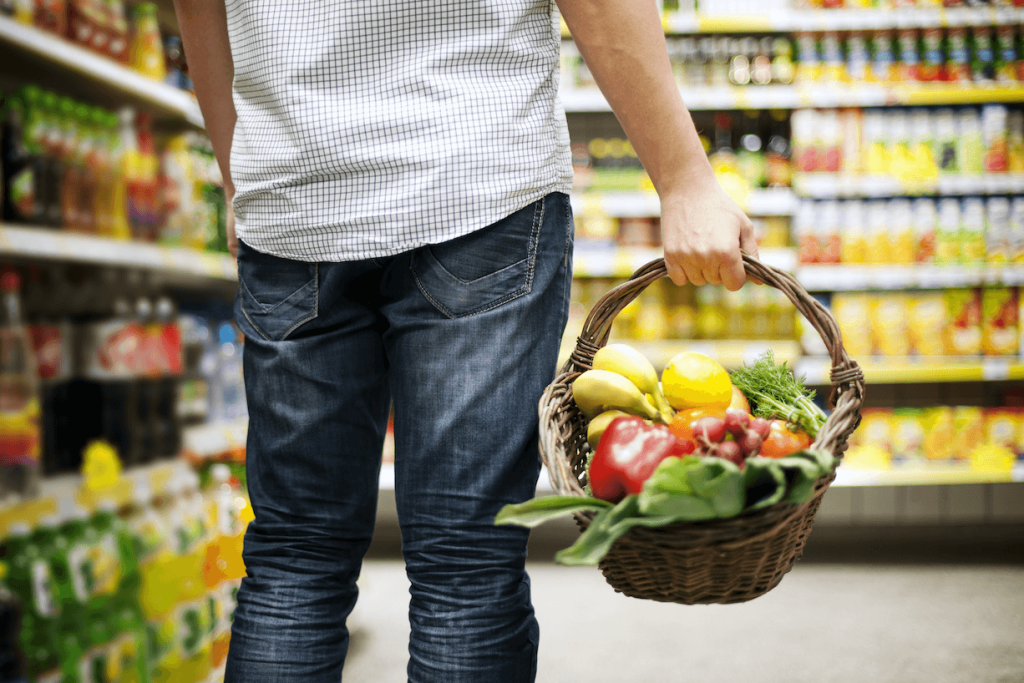
While studying food technology at Wageningen University, I made a number of discoveries about supermarket food.
1) A lot of food in the supermarket is artificial
A healthy apple or honest piece of meat makes much less money than a factory-made food product. Because artificial foods have the highest profit margins, the food industry pays the most attention to them and the supermarket shelves are full of them. These food products do not come from the kitchen, but from the laboratories of the food industry. Canned food, meat products, ready meals, margarines, dairy products, sauces, soups, biscuits and spice sachets have little to do with cooking, but more to do with chemistry. Cheap bulk soya, maize, wheat and milk are sometimes dissected down to the molecule and keyed into new food products with self-designed chemicals.
As one expert in the critical documentary Food Inc. puts it, 'Many foods we see in the supermarket are not food, in my opinion. They are, so to speak, edible, food-like substances.' These laboratory products are patented and marketed under a catchy name with the aim of making as much money as possible.
2) Modern food contains harmful substances
Such as traces of pesticides and chemicals leaking from the packaging material into the food. This can be avoided with a different approach and packaging, but it is cheaper to leave it as it is.
3) Modern food contains chemical additives
which do not naturally belong in food, such as fragrances, colours, flavourings and preservatives. In this way, manufacturers try to sell more products and increase profit margins, while the health effect of chemical additives is controversial.
4) Food manufacturers are not always transparent about their products
A manufacturer should state on the packaging exactly what is in the food product. There is still a long way to go. Manufacturers do not have to show the back of their tongues and have plenty of ways to hide unsympathetic-sounding substances from you or disguise them with innocuous-sounding terms.
5) Many health claims about food are untrue
What food scientists sell us as unshakeable truths (milk is good for all, saturated fat is bad for the heart and vessels, aromas, colours and flavourings are safe), often turn out to be unproven or simply incorrect on critical inspection. Because health claims and advice are constantly changing due to advancing scientific knowledge, you should take them with a large grain of salt.
By putting completely new food blends on the shelves on the one hand, while on the other hand little is known about their long-term health effects, we as consumers are unwitting guinea pigs in a global health experiment. Are packets of soup with balls of soy protein, tubs of dairy full of high fructose corn syrup and Chips sauce with particles of bisphenol-A coming out of the packaging really as safe and healthy as the manufacturers claim? The omens are not rosy given the encroachment of diseases of affluence
Is today's supermarket food safe?
I hear you object that everything food manufacturers put in front of us has been tested for safety. That's right. Strict rules and stringent controls have been put in place to ensure food safety and protect your health from malpractice. Therefore, the chances of becoming acutely ill from a food are lower than ever. Especially when it comes to hygiene, we are in good shape.
But whether a particular food product or chemical additive can give you diabetes, cardiovascular disease, cancer, persistent obesity or some other chronic condition if you eat it year in, year out, is a question no one can answer with certainty. While a long list of individual chemical additives and traces of pesticides have been found to do no harm with 'normal' consumption, the effect of all these substances together is impossible to test. And in practice, of course, we ingest all these substances as a cocktail. Little is also known about the health effects of daily consumed, artificial factory food compared to natural food.
My motto
My motto amid all this uncertainty and unsettling omens is therefore:
Stay as close to nature with your diet as possible. Eat as much as possible what our ancestors ate in the time before manufacturers started interfering with our food.
Sufficient real food
Fortunately, there is still plenty of 'real' food to be found among the factory products in the supermarket. It is possible to eat delicious and healthy food every day, without phthalates, bisulphites, polycyclic aromatic hydrocarbons and trans fats ending up on your plate. Many supermarket products are very well produced and safely packaged.
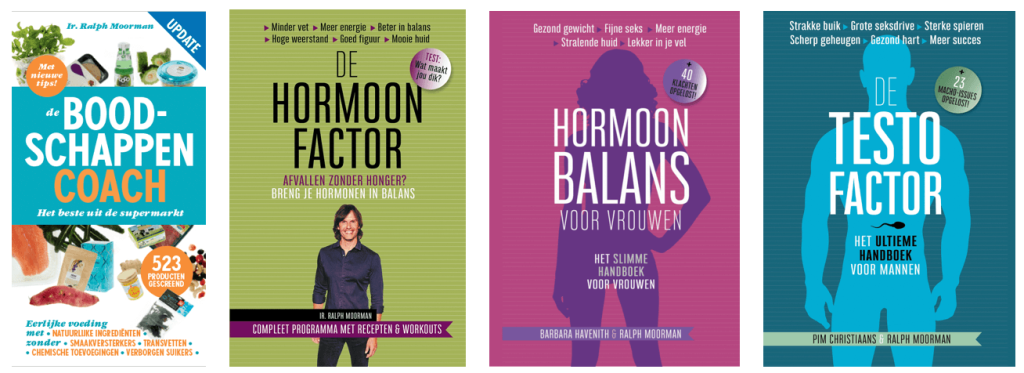
In the book The Grocery Coach I have conveniently listed a series of these amazing foods for you. Beware, I do not claim to be omniscient. Despite my background as a food technologist, it is impossible for me too to scan all (thousands!) of supermarket products and accurately assess their value. The products I have selected for you are just a selection from the huge ash assortment - but to the best of my knowledge a safe and healthy selection.
The main aim of this guide: to make you more aware of the risks of modern food and empower you to make healthier choices on your own. If there are more discerning, well-informed consumers and the demand for good food (and more transparency) increases, supermarkets and food manufacturers will naturally respond.
Most workers in the food industry would love nothing more than to provide great, healthy food - if only there was a market for it. By buying more good food, you will ensure that more good food appears on the shelves!
Become your own guru!
The book The grocery coach is a handy reference book that suggests lots of ways to improve your diet. You may want to do everything right the first time, but don't lose sight of the big picture. You may be very concerned about that one biscuit with your coffee, but if you drink five bottles of wine a week, it is better to tackle that habit first. It's a good idea to analyse your lifestyle from a helicopter view: start with the biggest areas for improvement and zoom in on the details later.
Become aware, not afraid
The book The grocery coach is designed to make you aware of the many, often hidden after parts of food in the supermarket. For the sake of clarity, I have uncompromisingly rejected many products. However, don't be put off by my strict attitude. Occasional sinning is not only allowed, but a must as far as I am concerned, because otherwise it is almost impossible to eat healthier permanently and relapse is lurking. Products you eat occasionally are not that important, but products you consume daily are all the more so. So make your own compromise and realise that every improvement is a step in the right direction. Think of this guide as the starting point of an exciting exploration of healthy eating, in which I hope to inspire you.
Want to learn more about supermarket food? Then follow the course and learn the supermarket safari, among other things!

 English
  Dutch
Dutch 
8 Response(s), post a comment too!
Hi, in the 80s,90s we often went to France, and there they still had that traditional shops small but perfect, loved to shop there, I think if we go back to smaller and targeted food, that's much better for the environment and people, delicious meat, they didn't have that in the Netherlands, what difference does it make, ideas then, but change is not always a success it had to be big and easy, but whether it's better, don't think so I think we'll grow towards that automatically, hope I'll see that yet. Without colourings and flavourings and e and stabiliser toxins, what have we done to each other, how strange that we all get cancer, and that we have allowed it!!!! Gr Marja jump
Indeed, many experiments with our health in these products
[...] The truth behind supermarket food [...]
[...] I found out that that lifestyle was not healthy, but with that my interest in healthy eating was piqued. I started to delve into it and checked out a lot of diet books. That became another [...]
According to Ministry of Health figures from 1 January 2018, 9.9 million people in the Netherlands had one or more chronic conditions. This corresponds to 58% of the Dutch population. It is now 2020... HOW many? Among the over-75s, it is much worse because..., over 95% have a chronic condition!!! There are more women than men with a chronic condition. Enjoy your meal!!!
Thanks for the addition Ton!
Oh. Oh. I totally agree with you, I buy in the supermarket, as much unprocessed food as possible, so "real", like vegetables, fruits, proteins (meat,fish,chicken etc. and dairy).
Anything that grows in nature and as little as possible that is man-made.
You are absolutely right about that Antonia 🙂 ...