
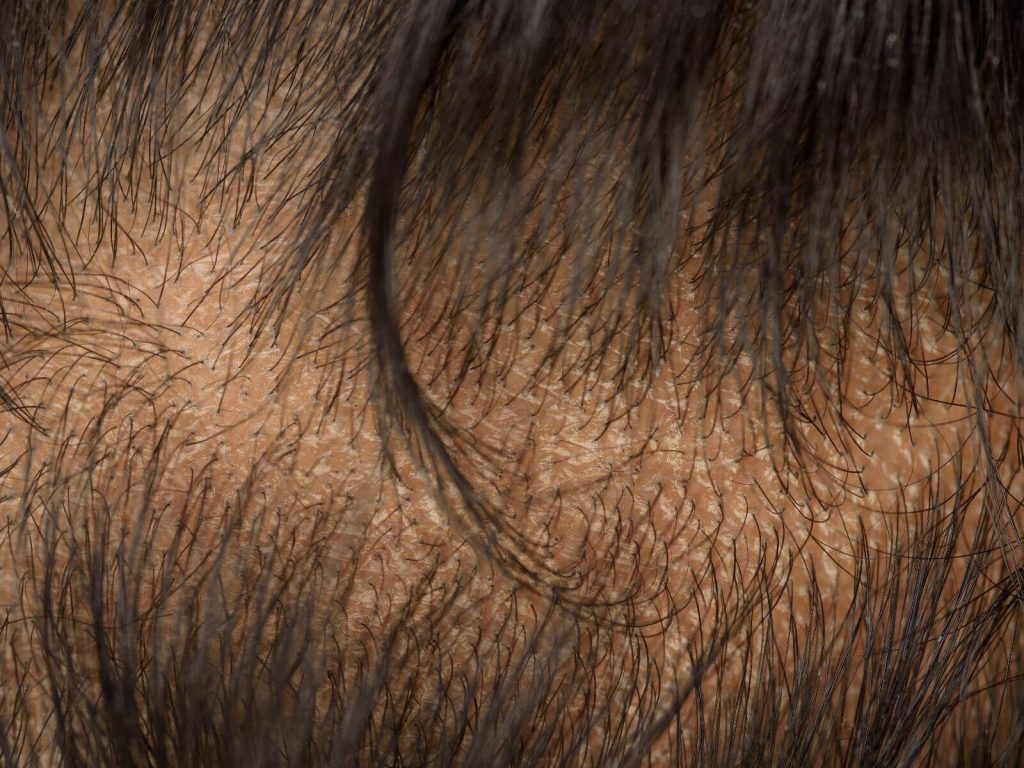
All kinds of hair loss
There are all kinds of hair loss or 'alopecia'. These include male pattern baldness influenced by, among other things male hormone, which incidentally also occurs in women. There is also the areata form which autoimmune in nature. With these two 'hair-issues', nutrition and lifestyle have a complementary to medical role to play.
Telogen effluvium
- Acute telogen effluvium often results from severe short-term stress. In that case, normal growth may recover after a few months.
- When the cause is prolonged as in the case of some more chronic telogen effluvium, it may have arisen from a nutrient deficiency, certain medication use or hormonal changes.
The causes
A common hormonal cause is delayed thyroid function:
- If this is to be a medical problem hair loss is going to be severe, but this is going to recover once thyroid medication is instituted.
- Also, the thyroid function suboptimal be and the problem is not medical. This is when, for example, the conversion of inactive T4 and T3 not quite right. This is a bit more about dormant hair loss, where the doctor says the thyroid is 'fine' and people end up with coaches like me.
Changes in sex hormones can also cause telogen effluvium:
- This is most common in the transition years (often also when accompanied by a stressful period) and after childbirth.
- But also starting with bioidentical hormone replacement therapy can temporarily put hair into a falling-out phase.
So in my practice, I see three causes of telogen effluvium most often:
- Hormonal changes in the transition period
- Severe stress period
- Medical thyroid problems (and reduced conversion to the active thyroid hormone T3).
In the latter case, the cause is often following too strict diets. As a result, the conversion of T4 to T3 goes on hold and the risk of deficiencies in nutrients the hair needs such as iron, b vitamins and proteins.
I notice with clients who experience this that they sometimes end up in an almost panic state, as if things will never be right again. Fortunately, this is rarely the case.
Patience is a difficult but also clean thing in this case
 English
  Dutch
Dutch 
2 Response(s), post a comment too!
How nice that the hair loss has gone over Anderske! Thanks for your comment 🙂
Hello Ralph
I've been using bio identical hormones for a year and testosterone since 3 months (2 mg a day)
2 months back, I also had a lot of hair loss, I was afraid it was because of that. Now it's better again.