
"Eat real food and avoid ultra processed" What does this actually mean?
Eat real food!
As I made clear in a previous column of mine, I think the slogan above the USA's new nutrition guidelines led by Robbert Kennedy is a great starting point in communicating to citizens, namely: "Eat real food!".
Obviously, a food product that has undergone multiple processing steps and requires a huge list of additives is not something your great-grandmother would recognise as real food. Your great-grandmother's glasses are fine to use as criteria to make your food choices. After all, things have certainly not improved in terms of health in the world in recent decades with an epidemic of obesity, metabolic disturbances and associated chronic diseases manifesting themselves at an increasingly younger age. This is where the food industry with all its (experimental) operations and additives undoubtedly contributed to it.
However, this is not at all to say that all types of processing and additives are necessarily unhealthy. They have advantages and disadvantages.
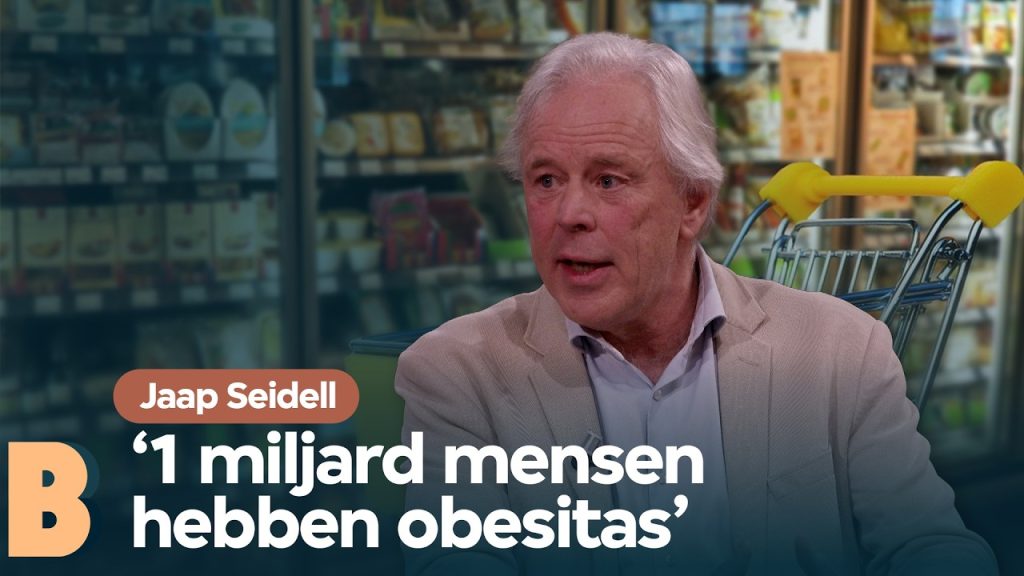
It is up to product developers, food companies and control authorities to give sufficient priority to the short- and long-term health effects and risks. In my opinion, this is often not the case, and I am certainly not alone in that. The Voedingscentrum and other Dutch authorities such as the emeritus professor Jaap Seidell, whom I highly esteem, are also increasingly denouncing ultra-processed food, as he was recently allowed to explain in Buitenhof.
What is real nutrition?
However, it is quite difficult to set clear criteria and limits when the application of treatments and additives goes too far. This is because when you take a closer look at the different treatments and additives, there is no clear picture.
I will elaborate on some examples:
- Refine is an operation in which raw materials are purified and refined. In the world of food, this often involves extracting fibre, as in refining unpolished rice into white rice or a sugar beet into granulated sugar. This processing has a negative impact on health value. First of all, nutritional value is extracted such as fibre, vitamins and minerals. In addition, blood sugar sometimes rises faster after eating a refined product than an unrefined product and this is especially for people who are insulin resistance have a problem. Blood sugar then rises too fast and too high, often followed by a blood sugar dip (if not already diabetic 2). During blood sugar dips, people often make very unhealthy choices and turn to sweet snacks to get rid of that unpleasant feeling. Unfortunately, a large proportion of people in the Netherlands today are insulin-resistant to a mild to severe degree. So for these people, the refining of carbohydrate sources by the food industry is especially unfavourable. But of course, there are exceptions here too. There are people with digestive problems who have fewer symptoms when they choose low-fibre refined carbohydrates. Customised dietary advice could therefore deviate from the general advice to choose whole-grain cereal products, for example.
- Fermenting is a controlled preservation technique in which bacteria, yeasts or fungi convert sugars into acids or alcohol. This improves the shelf life, texture and taste of food and increases its nutritional value and digestibility. But fermentation can also have negative side effects for some people. For instance, histamine can be released by the process, which is not good news for people who are histamine intolerant. Fermentation can also create free glutamates, which on the one hand provide a prized umami flavour, but on the other hand have the downside of giving some people negative side effects, as with the chemically manufactured free glutamate, or flavour enhancer E621.
- Heating of food can take place to various degrees. It has the advantage that it makes many foods easier to digest and can kill (especially live) potentially harmful bacteria. It can also eliminate some harmful plant substances, but if you heat too high, however, unhealthy substances such as advanced glycation endproducts (browning) and polycyclic aromatic hydrocarbons (black bits, charring) are created again. The delicious aroma that can be created by heating is sometimes highly desirable as in the creation of caramel and the smell of bread, but it does make it easy to overeat.
- Plant breeding is used, for example, to increase product yield, strengthen plant resilience and improve flavour. Especially when the goal is flavour enhancement, this can have a negative impact on health value. Selective breeding to increase sweet taste (more sugar) and reduce potentially healthy bitter compounds is therefore a bad idea from a health perspective. Also, increasing the resilience of plants to fungi and other influences may cause it to interact with our own immune system when we eat it. As a result, more people may have a food hypersensitivity to modern wheat varieties made more resistant to fusarium fungus, for example.
- In many ultra-processed foods sugar, fat and salt are combined in such a way that a so-called 'bliss-point' is created, i.e. a point of delight where happiness substances are released in your brain. This causes people to eat these products not only because of real hunger, but mainly for mental reasons (eating without hunger). This could be to suppress a negative feeling or to reinforce a healthy feeling. The fact that supermarkets are full of these kinds of products is a major cause of the obesity epidemic.
- With additives widely used in ultra-processed foods can improve all kinds of product properties or disguise bad ones. That they are considered approved and found safe by authorities is really only about short-term toxicity. Not well studied are cocktail effects of multiple additives together, influences on intestinal flora and long-term effects (stacking effects). This makes these substances still quite experimental when it comes to long-term health effects.
Conclusion
As you can see, as always, nuance is in order in these kinds of discussions. Still, I would advocate using simple slogans in communications. 'Eat minimally processed and natural' In doing so, it is a very easy one to understand for everyone and a great starting point for deepening.
 English
  Dutch
Dutch 